
Confluence Journal of Multidisciplinary Studies publishes every research article as an audio article as well: a complete reading of the text, divided into chapters that follow its section headings. Each new issue is added as soon as it is released. Each episode’s notes give the DOI and an MLA citation.
The narration uses a synthetic American English voice. The text is the authors’ own; notes, tables and works cited remain in the published articles.
Vol. 1, No. 1 (2025)
14 audio articles
- 1
- 2Graphic Occupation: Joe Sacco and the Artwork of Bearing WitnessSawsan Malla Hussein
- 3
- 4
- 5
- 6
- 7Leadership in the Age of Content Creators and Influencers: A New Paradigm of Influence and AuthorityHafssa Chahbane and Khalid Houssaini
- 8Exploring the Experiences of International Solo Women Travelers to MoroccoAicha Bouchara and Jihane Benmassoud
- 9
- 10
- 11Digital Pragmatics and Human Identity in Interactions with Selected AI ChatbotsChukwuma Livinus Ndububa and Bibian Ugoala
- 12
- 13
- 14
Vol. 2, No. 1 (2026)
9 audio articles
- 1Brion Gysin: Beat Outsider in MoroccoAllen Hibbard
- 2From Voice to Text: Untranslated Orality in Paul Bowles’s Moroccan CollaborationsInass Essrhir and Sawsan Malla Hussein
- 3
- 4
- 5
- 6Against the “Ingathering”: Mizrahi Renaissance and the Politics of Deterritorialization in Ronit Matalon’s The Sound of Our StepsChaimae Belahrache and Brahim Barhoun
- 7Global Appeal, Local Identity: The Rise and Role of Anglicisms in Moroccan Brand Naming PracticesFatima Azzahraa El Yamlahi
- 8On the Syllable Structure of Northwestern Moroccan ArabicMustapha El Hadri
- 9Beyond Personalization: A Framework for Ethical, Equitable, and Human-Centered Digital Learning Ecosystems in the AI EraIbrahim Ben Khajjou, Ibrahim Belmir, and Ahmed Ibrahimi
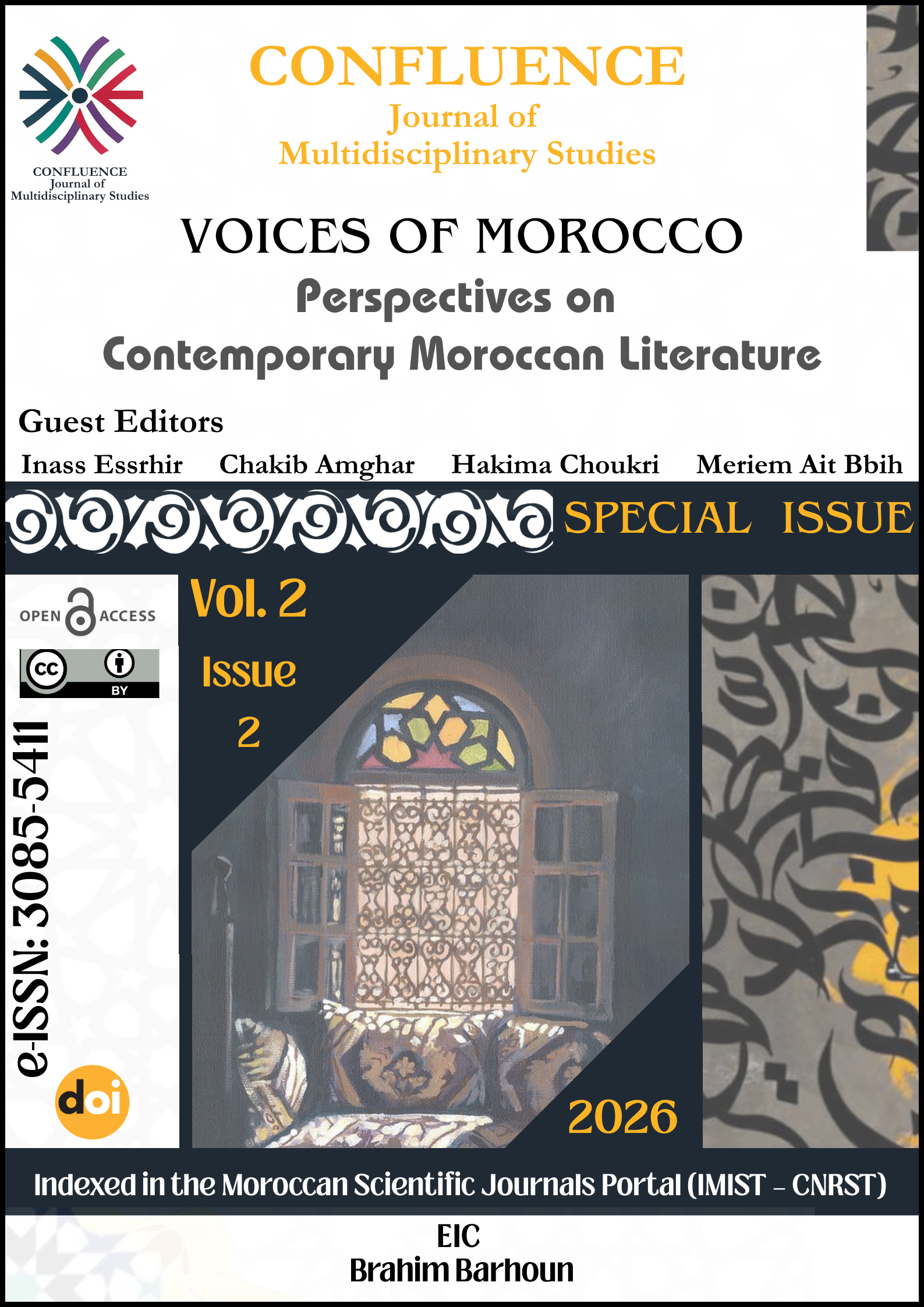
Vol. 2, No. 2 (2026)
Special issue, Voices of Morocco · 6 audio articles
- 1
- 2
- 3
- 4
- 5
- 6
Vol. 2, No. 3 (2026)
13 audio articles
- 1
- 2Memory Without Aftermath: Recalibrating Postmemory in Holocaust and Nakba LiteratureDouaa Abridaa and Sawsan Malla Hussein
- 3
- 4From Moroccan Jewish Memory to Israeli Settlement: Ethnicity, Nationalism, and Palestinian Erasure in Yamit Armbrister’s One Moroccan WomanChaimae Belahrache and Brahim Barhoun
- 5Moral Authority and Communal Ethics in Moroccan FolktalesMohamed Rouichi
- 6Same Shit, Different Toilets: Terror, Outrage and the Cycle of Power in Wole Soyinka’s King BaabuKwasu Katung John and Dominic James Aboi
- 7A Sociopragmatic Investigation of Yejide Kilanko’s Daughters Who Walk This PathChibuike Smart Mbarachi and Chinyere Christiana Ndeche
- 8The hijra in Arabic Media Context: A Corpus-assisted Discourse Collocation AnalysisAzzouz Belkharraf and Zakariae Azennoud
- 9
- 10The Affective Public Sphere: Emotion as the Engine of Media Accountability in the MENA RegionBrahim Elboukhari and Abdelmalek EL Kadoussi
- 11
- 12Competency Frameworks and MOOC Design: A Framework for Language Teacher EducationSalma Driouach, Ahmed Ibrahimi, and Bouchra Chougrani
- 13
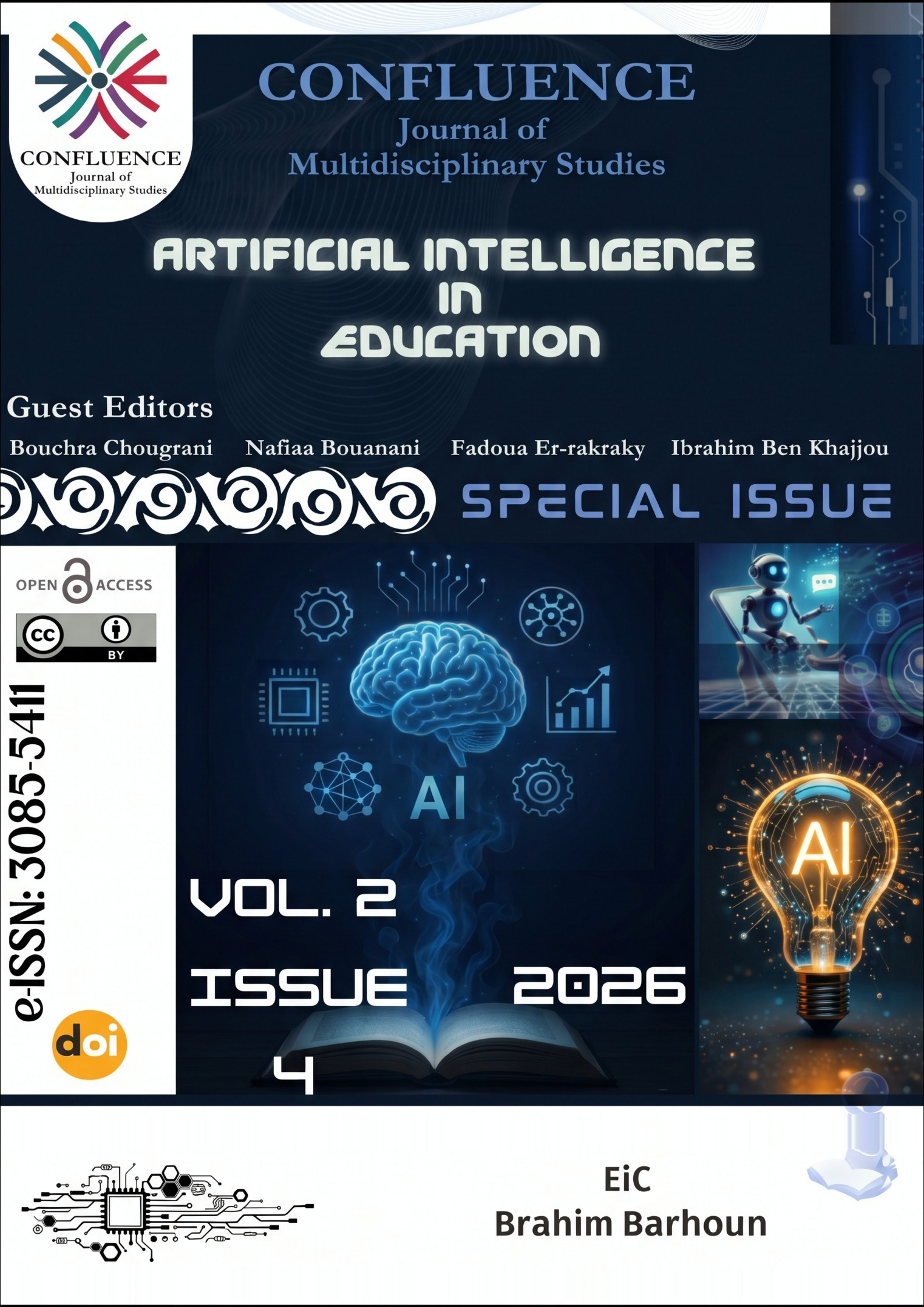
Vol. 2, No. 4 (2026)
Special issue, Artificial Intelligence in Education · 8 audio articles
- 1Reconfiguring Education in the Age of Artificial Intelligence: A Critical Theoretical Inquiry into Pedagogy, Knowledge, and Human AgencyOumaima Alyassini, Fatima Zahra Touzani, and Rachid Iseksioui
- 2Learning in the Age of AI: How AI Is Transforming Adult Learning in Corporate ContextsVidehi Bhamidi, Divya Joseph, and Maathangi Mohan
- 3
- 4The Effect of AI-Powered Adaptive Tools on Vocabulary Acquisition among University Students: A Systematic ReviewFadoua Er-rakraky and Nafiaa Bouanani
- 5Reframing Prompting Competence as a New Direction for CALL in the Age of AISalma Habiballah, Khawla Tadist, and Karima Azaimi
- 6Can Generative AI Support Course Design, Constructive Alignment, and Assessment in French for Specific Purposes?Ibrahim Ben Khajjou, Ibrahim Belmir, and Ahmed Ibrahimi
- 7
- 8